Welcome to the Horror Show: The Psychology of Art the Clown — Why We Can’t Look Away From the Monster

Welcome, my wonderfully disturbed besties, to Deadbeat Bestie—the spooky little corner of the internet where we examine nightmares, dissect monsters, and ask the important questions like: “Why are we fascinated by the things that absolutely should make us run away screaming?”
Today’s subject of psychological chaos? Art the Clown—the silent, grinning nightmare fuel of the Terrifier franchise.
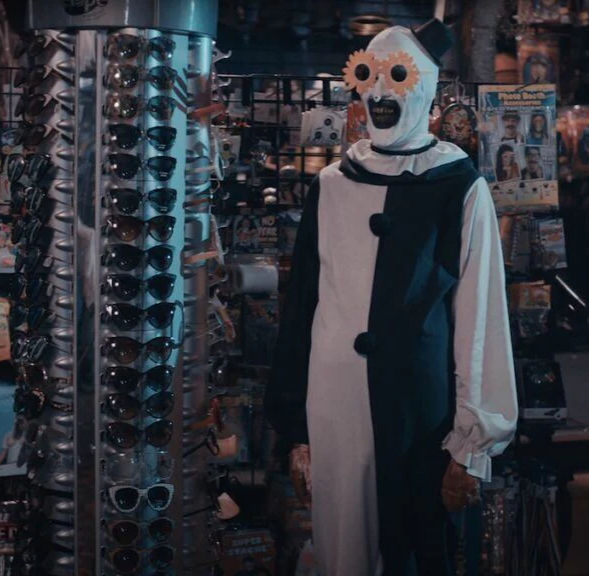
And let’s be honest: Art is not exactly the kind of clown you invite to a birthday party unless your goal is to traumatize an entire neighborhood and permanently ruin the concept of balloons. But beneath the makeup, exaggerated expressions, and theatrical violence is something that makes Art so fascinating as a horror villain:
He doesn’t just scare us...
He makes us uncomfortable because we can’t figure him out.
The Horror of the Unknown
One of the most powerful tools in horror is mystery. The less we understand something, the more our brains try to fill in the blanks—and our imaginations are usually much scarier than reality.
Art doesn't communicate in a traditional way. He doesn’t explain himself. He doesn’t justify his actions. He doesn’t offer a tragic backstory that asks us to sympathize with him.
He simply exists.
And that silence makes him unsettling.
Humans are wired to search for patterns and motives. We want to know why someone behaves the way they do. Is there trauma? Revenge? A goal? A reason?
Art gives us none of that.
He’s a walking question mark with a creepy smile.
The Clown Effect: Why the Funny Becomes Frightening
Clowns have always occupied a strange psychological space. They are designed to be cheerful, exaggerated, and entertaining—but something about their unnatural appearance can trigger discomfort... Especially in me. Like, wtf, clowns?!?
This is part of what psychologists call the uncanny valley: when something looks almost familiar, but just different enough to feel wrong.
A clown is supposed to make us laugh.
A silent clown staring at us with exaggerated expressions and unpredictable behavior?
That makes our brains start flipping through the emergency manuals.
Art takes everything associated with clowns—playfulness, performance, silliness—and twists it into something threatening. He turns entertainment into uncertainty, making us question whether we should laugh, scream, or slowly back away.
(Hint: None of these options will help you.)
The Psychology of Performance
One of the most interesting things about Art is how theatrical he is. He doesn’t simply exist as a threat—he performs.
He uses exaggerated gestures, dramatic reactions, and almost cartoon-like behavior. His movements often resemble a silent film performer or a twisted vaudeville act.
This creates a disturbing contrast:
The body language says, “Look at me! I’m entertaining!”
The situation says, “Absolutely not. Something is deeply wrong here.”
That contradiction keeps audiences uncomfortable because we’re constantly trying to interpret what version of Art we’re seeing—the comedian, the monster, or both.
Why Audiences Are Drawn to Him
So why do horror fans love Art?
Because great villains are often more than just scary. They become symbols.
Art represents chaos without explanation. He represents the fear that sometimes terrible things happen without a satisfying reason or neat resolution.
Unlike villains who follow rules or have understandable motivations, Art feels unpredictable. He doesn’t fit into a box—and that unpredictability keeps audiences fascinated.
We fear him because we don’t understand him.
We watch him because we want to.
Classic horror contradiction: our brains say “avoid,” while our curiosity says “just one more scene.”
Our curiosity has terrible survival instincts. You know the phrase, "Curiosity killed the cat but satisfaction brought it back? Well prepare to not be satisfied... and you might want to bury the cat... it's dead.
Deadbeat Bestie’s Final Thoughts
Art the Clown works because he is more than a scary character. He is a psychological experiment wrapped in clown makeup.
He challenges our expectations, turns comfort into fear, and reminds us that the things meant to entertain us can sometimes become the things that unsettle us the most.
The real horror isn’t just the clown.
It’s the question behind the smile:
What happens when something designed to make us feel safe becomes the very thing that scares us?
So grab your popcorn, keep the lights on, and maybe avoid accepting mysterious invitations from silent clowns.
Because if horror movies have taught us anything…
The weird clown is never just there for the party.
Maybe, just to be safe, don't invite a clown to the party... You know... For safety.
Stay spooky, stay curious, and keep questioning the monsters.
— Lex Hex 🖤
Comments